
Virtual Staging vs Physical Staging
Virtual Staging vs Physical Staging is usually a search for an honest account of what each approach does and does not do. Virtual Staging AI Real Estate keeps that process mobile and repeatable with room presets, style controls, and before-and-after exports.

Scan to download
When this search intent is a fit
This angle makes sense when you need a clear-eyed comparison before choosing digital or physical staging. The app helps you move from an empty room photo to deciding which rooms warrant real furniture and which do not without waiting on furniture logistics.
What the app actually helps with
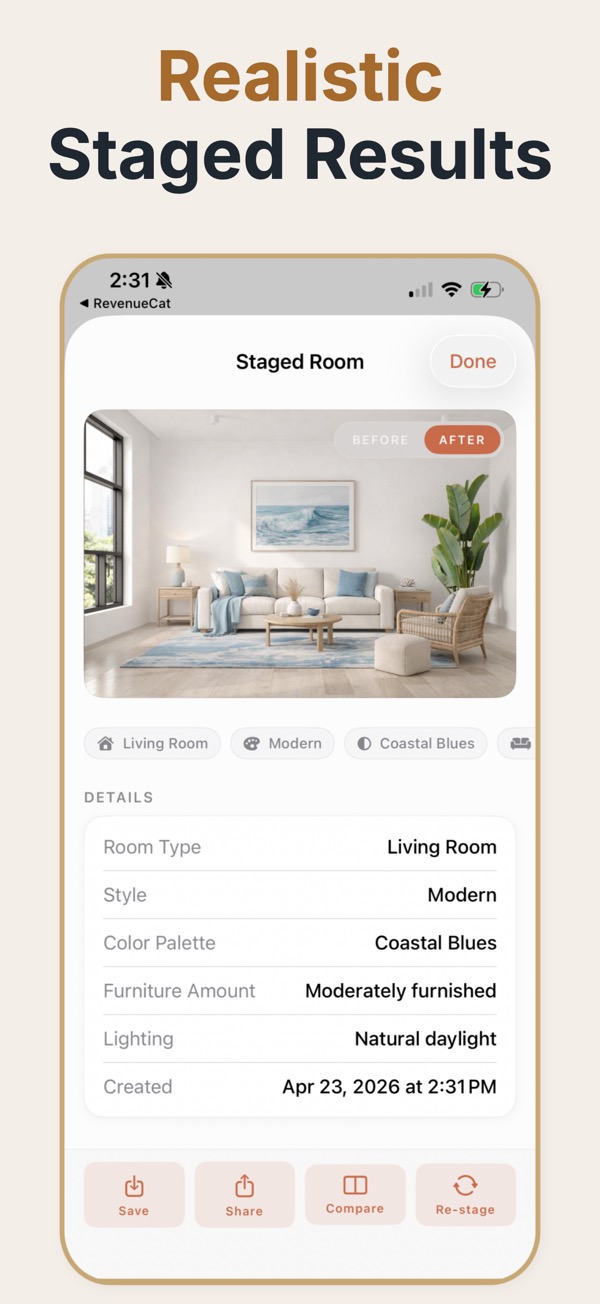
Upload a real room, choose a design direction, tune furniture density and decor, and export polished results for listings, seller reviews, presentations, or internal approvals.
What teams use inside the workflow
- Preview Virtual Staging vs Physical Staging on real room photos instead of generic concept art.
- Switch among multiple styles, palettes, and room types from the same device.
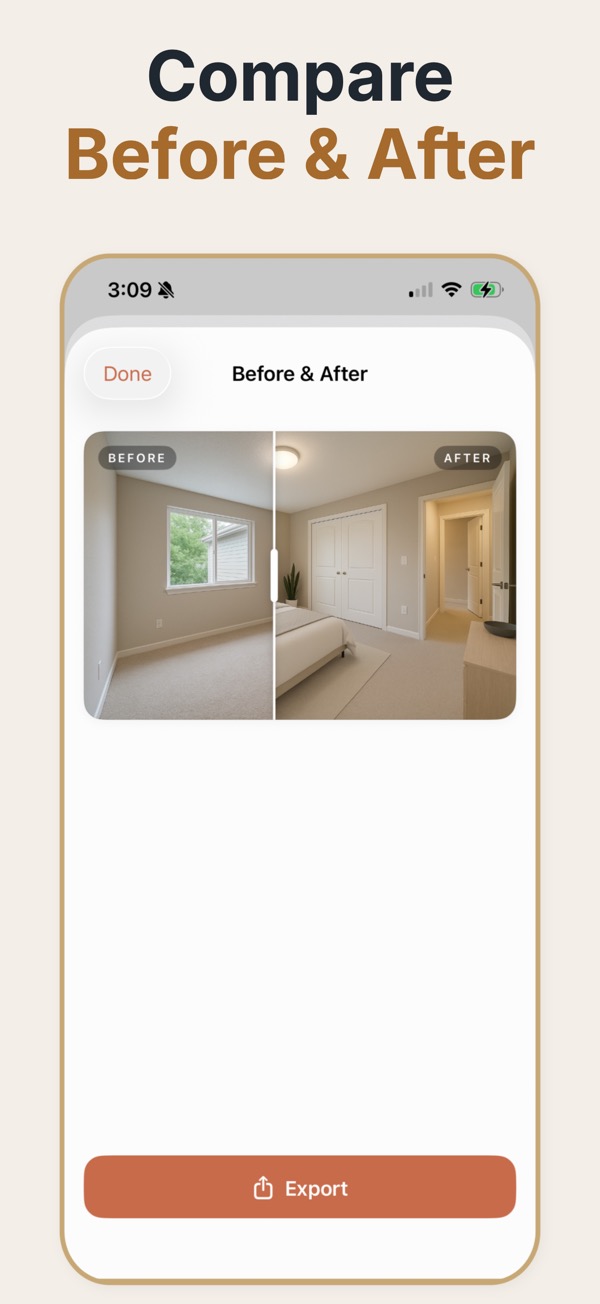
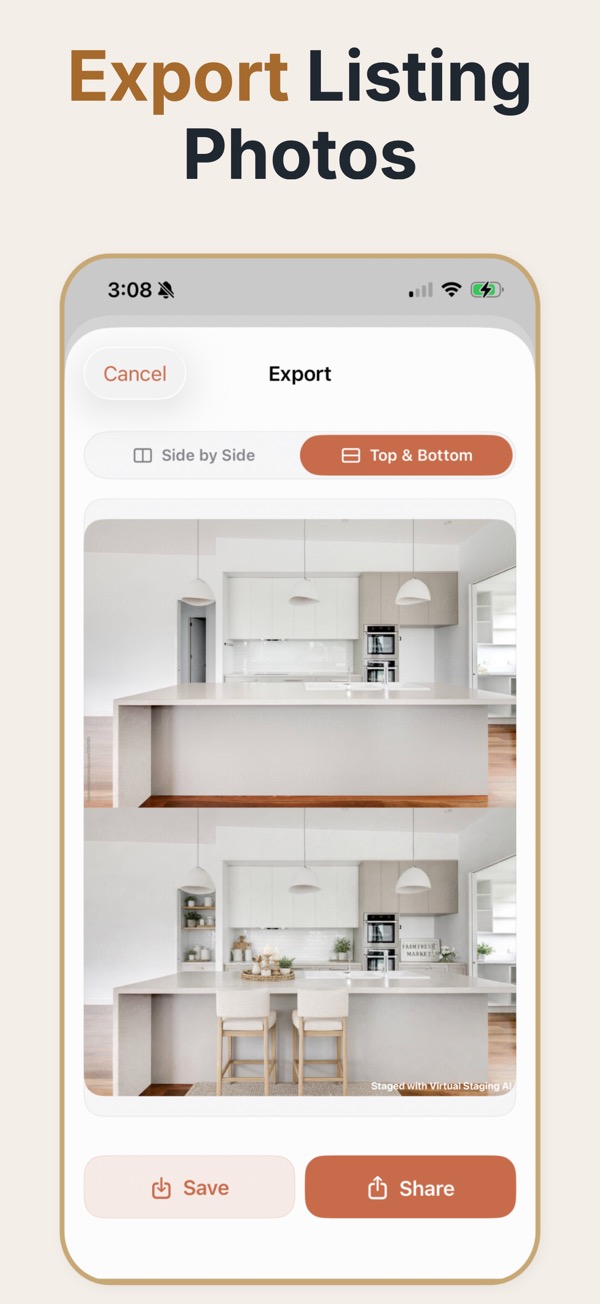
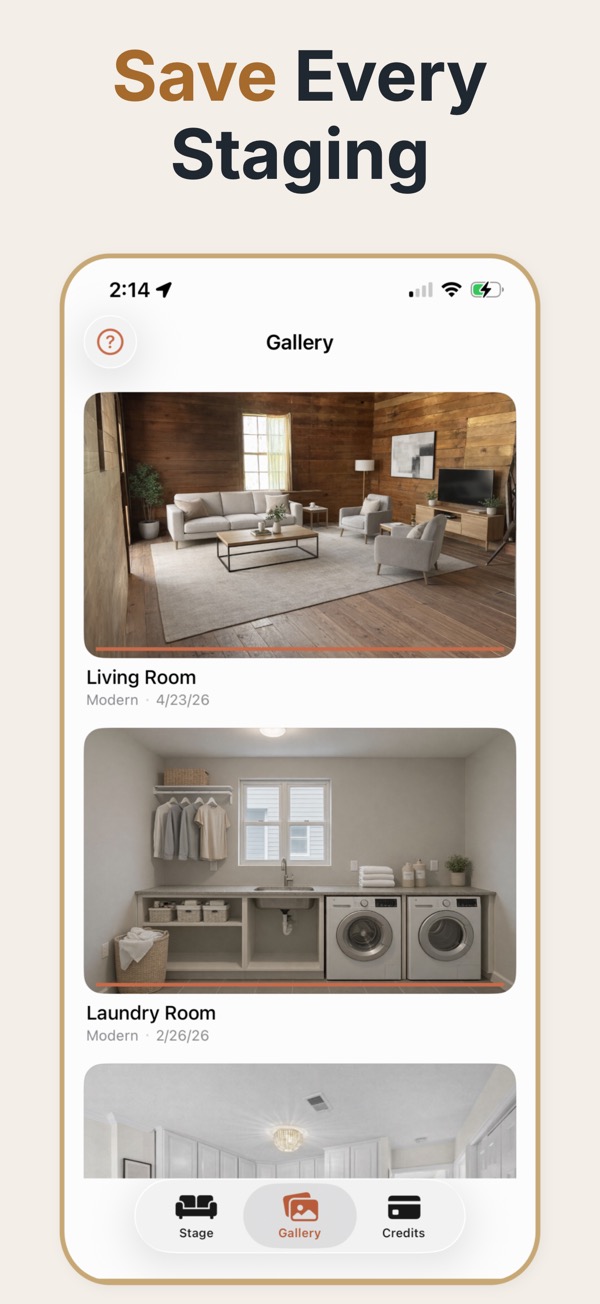
- Save before-and-after exports that are easy to share with clients or teammates.
These are not competing versions of the same product. Physical staging changes what a buyer experiences standing in the room; digital staging changes what a buyer sees before deciding whether to visit at all. They solve different problems at different points in the sale.
What each approach is actually for
The decisive question is where the property is losing buyers. If listings get plenty of views but few viewings, the problem is online and digital staging addresses it directly and cheaply. If viewings happen but do not convert, the problem is the in-person experience, and no amount of image editing will fix it — that is where physical furniture, and the way it makes a cold room feel habitable, earns its cost. Most properties have the first problem, which is why digital staging has become the default. The mistake is treating the choice as ideological rather than diagnostic: the right answer depends on which stage of the funnel is leaking, and on a slow listing the answer often changes partway through.
Choosing between them
- Plenty of listing views but few viewings booked: digital staging, targeted at the lead image.
- Viewings happening but not converting: physical staging, or address the property itself.
- Property likely to sell quickly: physical is affordable because the rental period is short.
- Property likely to sit: digital, because there is no recurring cost exposure.
- High-value property with a demanding buyer profile: often both, physical in the main rooms.
How teams actually combine them
Hybrid on higher-value listings
The main reception room is physically staged for viewings; the remaining rooms are digitally staged for the online gallery.
Digital first, physical later
Launch digitally staged. If the listing generates views but no viewings after a few weeks, the problem is confirmed as online, not physical.
Digital only
The default for apartments, rentals, and any property where a physical staging invoice would exceed the entire marketing budget.
Mistakes in the comparison
- Expecting digital staging to help at the viewing. It cannot; the buyer is standing in an empty room.
- Expecting physical staging to help online if the photography is poor. Real furniture photographed badly still photographs badly.
- Choosing physical staging on a slow-moving property without modelling the monthly rental.
- Publishing digitally staged images with no unstaged counterpart, which turns an online gain into a viewing-stage complaint.
Direct comparison
- Turnaround
- Physical: days to schedule and install. Digital: minutes per image.
- Cost profile
- Physical: high one-off plus monthly rental. Digital: modest, per image, one time.
- Effect online
- Both strong, assuming competent photography in either case.
- Effect at the viewing
- Physical: substantial. Digital: none — the room is empty when the buyer arrives.
- Revisability
- Physical: requires a new install. Digital: regenerate in minutes.
Common questions
How fast can the app create a staged room?
Most jobs are positioned around a sub-minute workflow, which helps when you are reviewing several rooms or preparing listing media on a deadline.
What can I control before generating the staging?
You can adjust room type, design style, palette direction, furniture density, lighting, and decorative details before generating.
Can I save before-and-after images for reviews or marketing?
Yes. The app supports staged exports and before-and-after layouts that work well for seller reviews, listing decks, and internal approvals.
Which sells a property faster, virtual or physical staging?
They act at different points. Digital staging increases clicks and enquiries; physical staging improves the in-person experience. On most listings the online step is the binding constraint, which is why digital staging is usually the higher-leverage choice.
Can I use both on the same property?
Yes, and on higher-value listings it is common: physical furniture in the main reception room for viewings, digital staging for the remaining rooms in the online gallery.
Does physical staging justify its cost?
On fast-moving, higher-value properties where the rental period stays short, often yes. On a listing that may sit for months, the recurring rental is what undermines the case.
Is digital staging seen as less legitimate?
Not when disclosed. It is standard practice across most markets. What damages credibility is publishing staged images without the unstaged originals, not the staging itself.