
Affordable Virtual Staging
Affordable Virtual Staging is usually a search for budget-aware digital staging that still looks professional. Virtual Staging AI Real Estate keeps that process mobile and repeatable with room presets, style controls, and before-and-after exports.

Scan to download
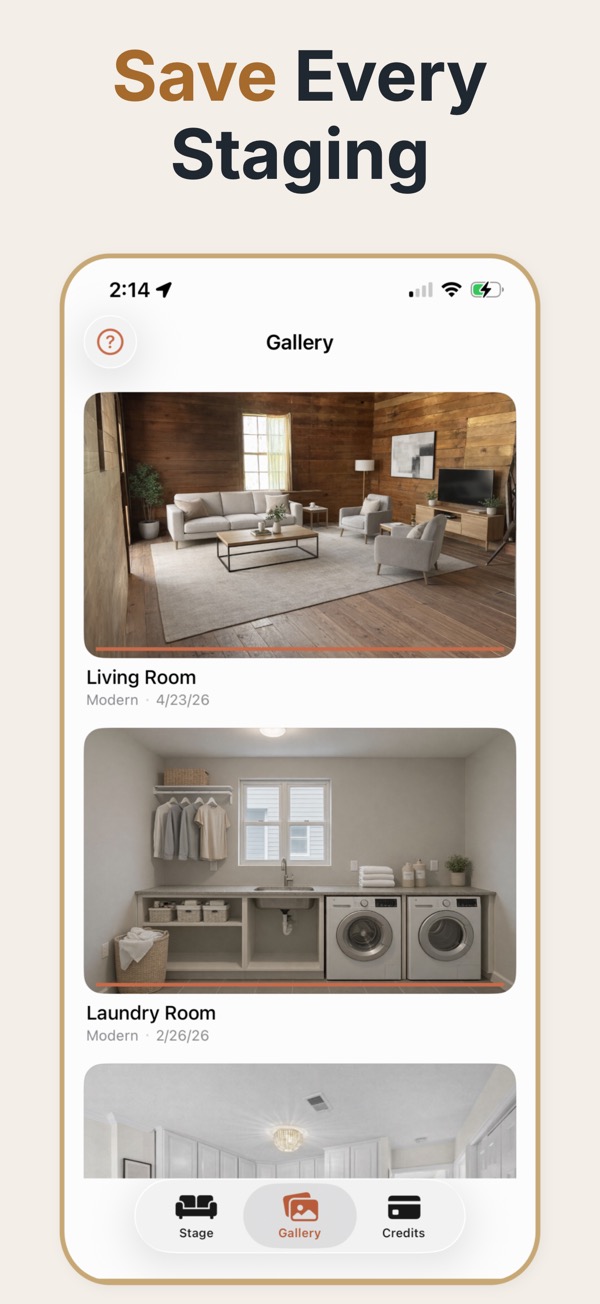
An affordable alternative to physical staging logistics
Affordable virtual staging can reduce the operational burden of furniture rental, delivery, pickup, and repeated room changes while still giving a listing useful visual context.
Compare a staging direction before spending on logistics
Use the actual room photo, test a furnishing direction, compare the result with the original, and export the concept when it supports the property’s marketing plan.
Where the savings can come from
- Explore furniture and decor directions without coordinating a physical delivery.
- Reuse a review workflow across multiple rooms and listing presentations.
- Keep the original photo alongside the staged concept for transparent marketing.
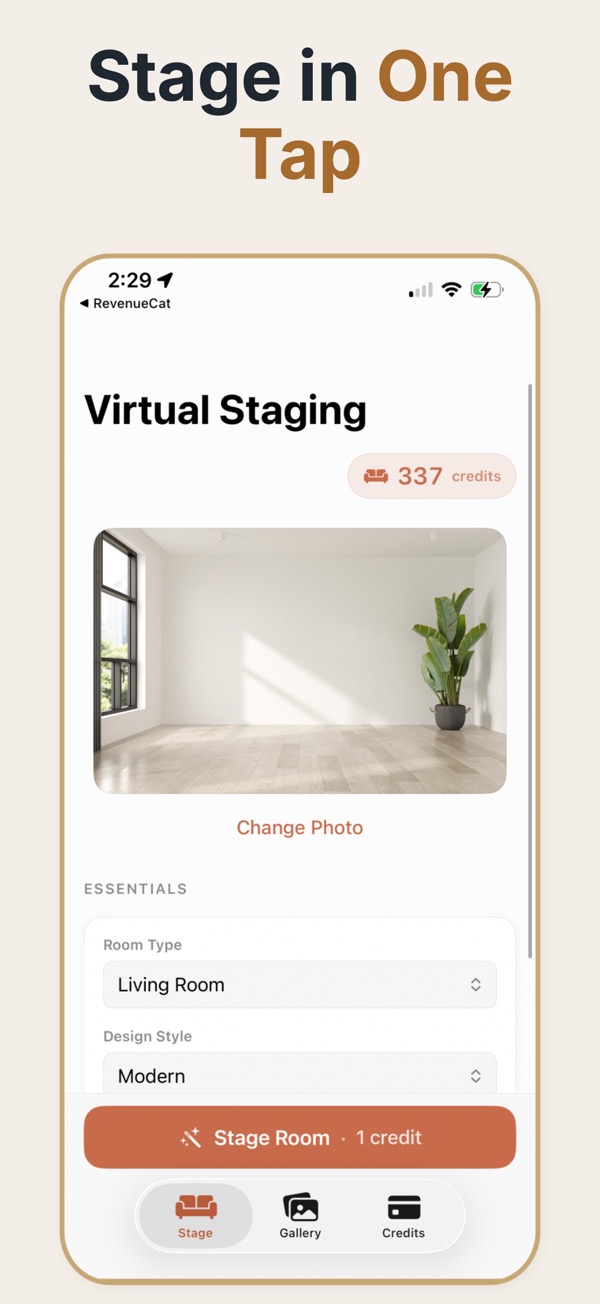
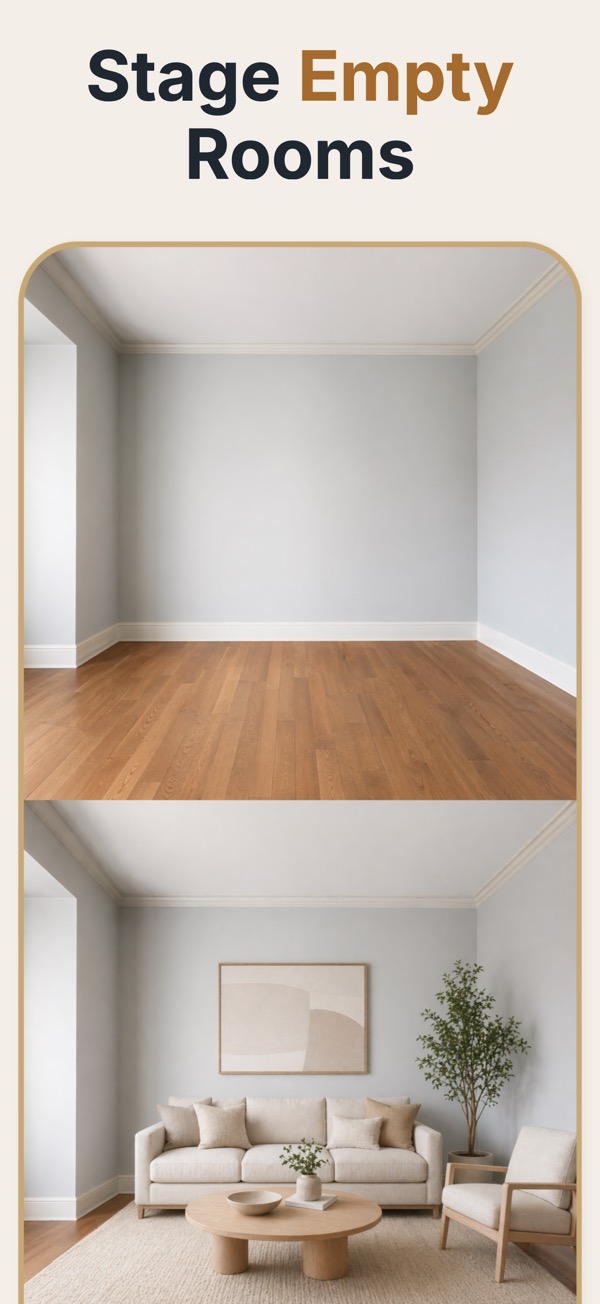
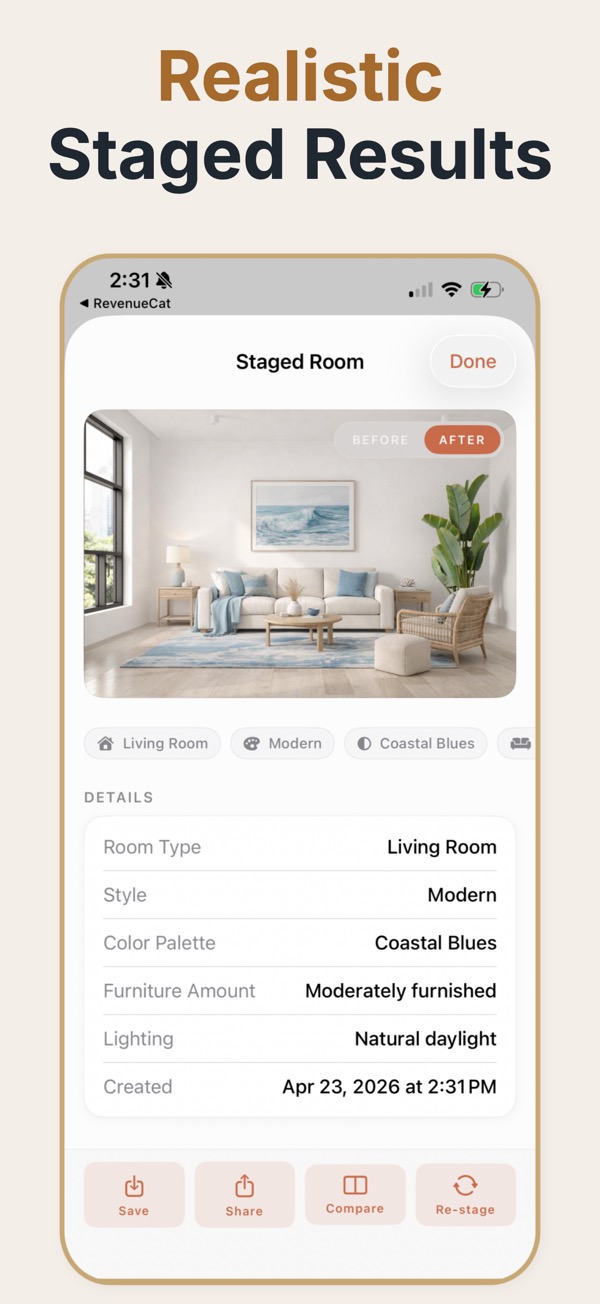
The cost argument for digital staging is not subtle. Physical staging of a whole property typically runs into thousands and takes days to install and remove; digital staging of the same rooms is a per-image cost measured in currency units, and it is done before the furniture van could have been booked.
Where the money actually goes
Physical staging costs are dominated by logistics rather than by the furniture itself: transport, installation, the rental period, insurance, and removal. Those costs are also largely fixed regardless of how long the property takes to sell, which is why a physical staging decision on a slow listing can turn into a monthly bill. Digital staging moves the cost structure from a rental to a per-image one, which changes which properties can justify it at all. A modest apartment that could never support a four-figure staging invoice can absolutely support staging three photographs. The tradeoff is honest: a buyer standing in the room sees an empty room, so the value is concentrated entirely in the online phase of the sale.
Keeping staging costs down without looking cheap
- Stage the two or three rooms that carry the listing, not all of them.
- Reuse one style across the property so the rooms look deliberate rather than assorted.
- Get the photography right first; re-staging a bad photo costs more than reshooting it.
- Generate a few directions and pick one, rather than paying to revise a single result repeatedly.
- Keep the source photos organised so a relaunch does not mean starting over.
Where the budget case is strongest
Lower-value listings
Properties where a physical staging invoice would exceed the marketing budget for the entire sale.
Rental and short-let marketing
High turnover and thin margins per listing make repeated physical staging impossible and digital staging routine.
Speculative or pre-instruction work
Staging a property you have not yet won costs almost nothing digitally and is unthinkable physically.
False economies
- Staging every room to feel thorough, which multiplies cost for very little additional clarity.
- Skipping professional photography and expecting staging to rescue the images.
- Choosing an obviously synthetic look to save time, which costs credibility at the viewing.
- Treating staging as a substitute for repairs that the property visibly needs.
Cost components to compare
- Per-image cost
- The digital staging unit price. Scales linearly with the number of rooms staged.
- Furniture rental
- The recurring physical staging cost, billed for as long as the property is on the market.
- Logistics
- Transport, installation, and removal. Often the largest share of a physical staging quote.
- Revision cost
- The price of a second attempt. Low digitally, effectively prohibitive physically.
- Exposure if unsold
- Physical staging keeps billing on a slow listing; a digital image is a one-time cost.
Common questions
Is affordable virtual staging always cheaper?
Costs depend on the property and workflow. Digital staging can reduce furniture logistics, but it should be evaluated against the marketing goal and required quality.
Can it replace physical staging?
It can provide a digital alternative for some listing needs, but physical staging may still be better when buyers need to experience the actual space.
What makes the result useful?
A useful result respects the room’s structure, uses plausible furnishings, and is clearly presented as a staged visualization.
How much does virtual staging cost compared to physical staging?
Physical staging is typically quoted in the low thousands per property, with monthly rental if the sale runs long. Digital staging is priced per image, so a three-room listing is a small fraction of that with no ongoing rental exposure.
Is cheaper staging obviously worse?
Not inherently, but there is a floor. Results that ignore room geometry or produce visibly synthetic furniture cost more in lost credibility than they save.
Does digital staging have ongoing costs if the property does not sell?
No, which is the main structural advantage. Physical staging keeps billing for the rental period; a digital image is a one-time cost.
Can digital and physical staging be combined?
Yes. A common approach is physically staging the main reception room for viewings and digitally staging the remaining rooms for the online listing.